What Problems Can AI Solve for Businesses?
What Problems Can AI Solve for Businesses?
An online store can sell quality products, process a high volume of orders, and bring in new customers while still dealing with returns, complaints, and customers who never come back. A shopper asks for an order update, has to explain the situation again to another team member, and still has no idea who’s handling it. Meanwhile, the team spends the day responding to individual requests. By the time the manager sees the pattern, several customers have already reported the same problem.
For a business that takes customer service seriously, the experience after checkout matters just as much as the purchase itself. Customers need to know when to expect their order, what to do if something
goes wrong, and who will follow up. A lot of that experience depends on how well the work behind the website is organized.
As a web designer, that’s where I start. I look at where information is recorded, which tasks the team repeats by hand, and how many screens a manager has to check to make a straightforward decision. Those answers help me identify what the website needs to handle and where AI can make the work easier.
Four signs your store’s operations need more structure
Routine questions take up too much of the team’s time. Staff keep looking up the same order details or return conditions across multiple screens.
Customers spot shipping delays before the store does. Several packages pass their expected dispatch window, and the team finds out when customers start asking for updates.
Return reports hide the reason behind the numbers. The dashboard shows that returns are up, while the comments that could explain a problem with the listing, packaging, or product sit in separate messages.
Social media feedback rarely makes it back to the store. Customers keep asking the same question, but it never makes it into the content plan or onto the product page.
What can a custom website built for future development offer?
When I design a custom website, I can plan the customer’s path through checkout and how an order moves between sales, fulfillment, and support afterward. That includes how order status is recorded, who follows up when something stalls, and how the manager sees what needs attention. A website designed for future development gives the team room to adapt those workflows as the business grows.
I use AI at two stages. During design, it can help me sort customer feedback and identify recurring questions or problems. That can show me where a product page needs clearer information or where shoppers get stuck while trying to track an order.
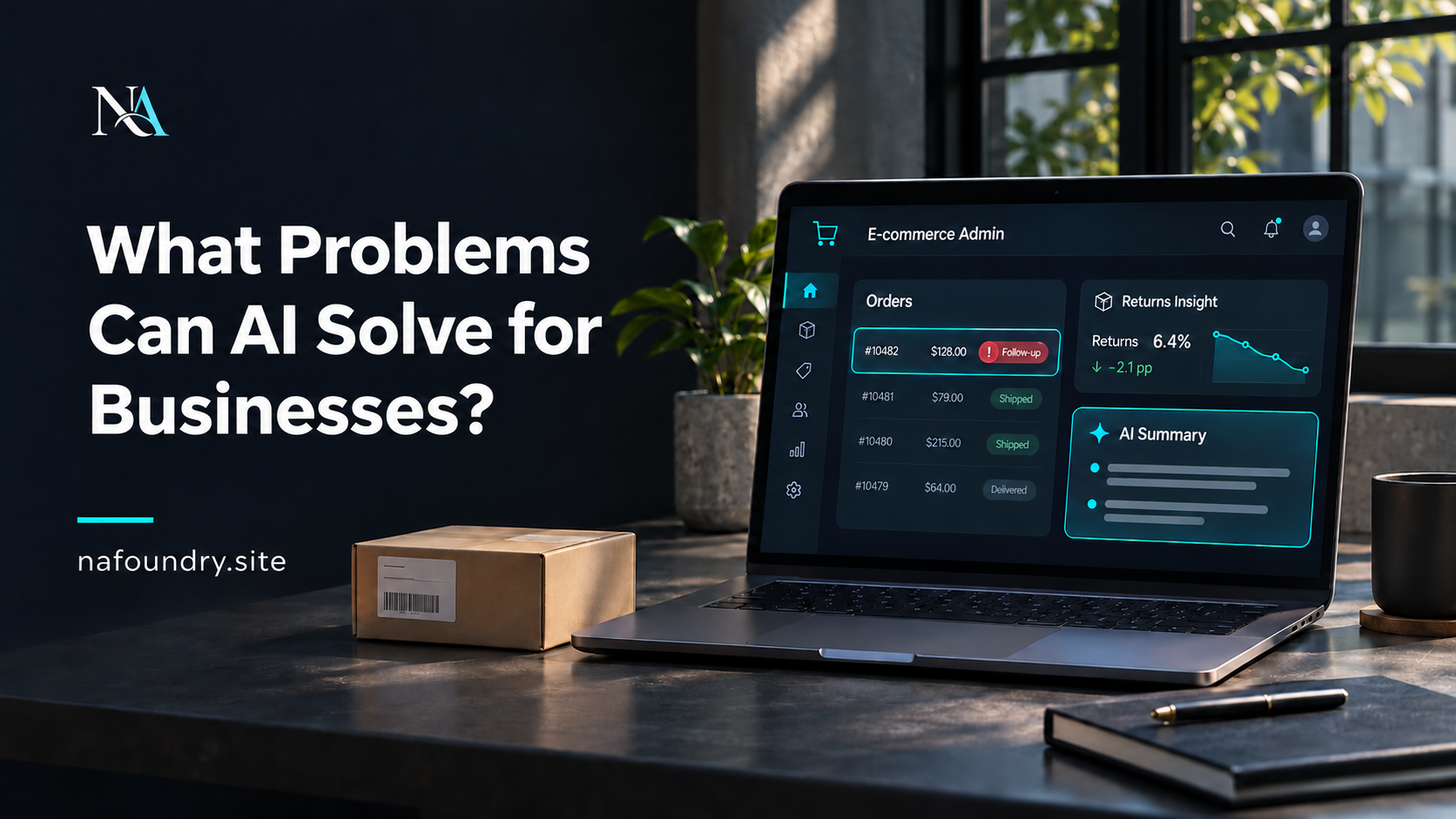
After launch, I can build AI features into the site and its admin panel around the way the business works. For example, AI can group written return reasons so the manager can open the relevant product and orders directly from the summary. The feature depends on access to the right data and the ability to extend the relevant parts of the site. With a custom website designed to grow, I can build data connections, access permissions, and follow-up steps around the team’s actual responsibilities.
How can AI make an admin dashboard more useful?
An admin dashboard can bring orders, inventory, sales, returns, and support requests into one place. Managers can see where each order stands, who’s responsible for the next step, and which issues are still open. If the existing admin panel can be extended and the data is accessible, AI features can be added to it.
Take a high-volume home goods store. The order system flags packages that have passed their dispatch deadline. AI summarizes the customer messages linked to those orders. On one screen, the manager can see which packages need attention and what customers have asked. Once the team verifies the status, it can review and send a draft update. Support can act before customers have to ask again, and the manager can see what’s going on without reading every message.
The same dashboard can surface recurring reasons for returns. If several buyers say they expected a desk lamp to come with a power adapter, the manager can review their comments and clarify what’s included on the product page. With authorized access to social media data, frequently asked questions can also inform product page updates or help the team plan a short tutorial.
How do you measure the time and money saved?
I look for a measurable change in how much time the team spends on a task or how quickly it can address a recurring problem. Before and after adding a feature, we can compare how long it takes to handle delayed orders, how often customers have to follow up, or how frequently a product is returned for a specific reason. The cost of development, ongoing use, and staff review belongs in that comparison. If the time saved and the lower handling costs outweigh the cost of running the feature, the business has a clear basis for investing in the next improvement.
If you want to find out where your website or admin dashboard could reduce your team’s workload and improve the customer experience, tell me which task takes the most time today. Whether you already have a website or are planning a custom build, we can review that workflow in an NA Foundry consultation and identify what the site can handle, where AI could help, and how to measure the result.
Request a Website Consultation